AI search optimization for your catalog.
We fix the product data that ChatGPT, Google AI Overviews and Perplexity read: attributes, titles, structured data fields and your feed. It improves eligibility and accuracy. It cannot guarantee placement.
BEFORE · 4 ISSUES
blk office chr ergo
furniture?
description: NULL
AFTER · LIVE
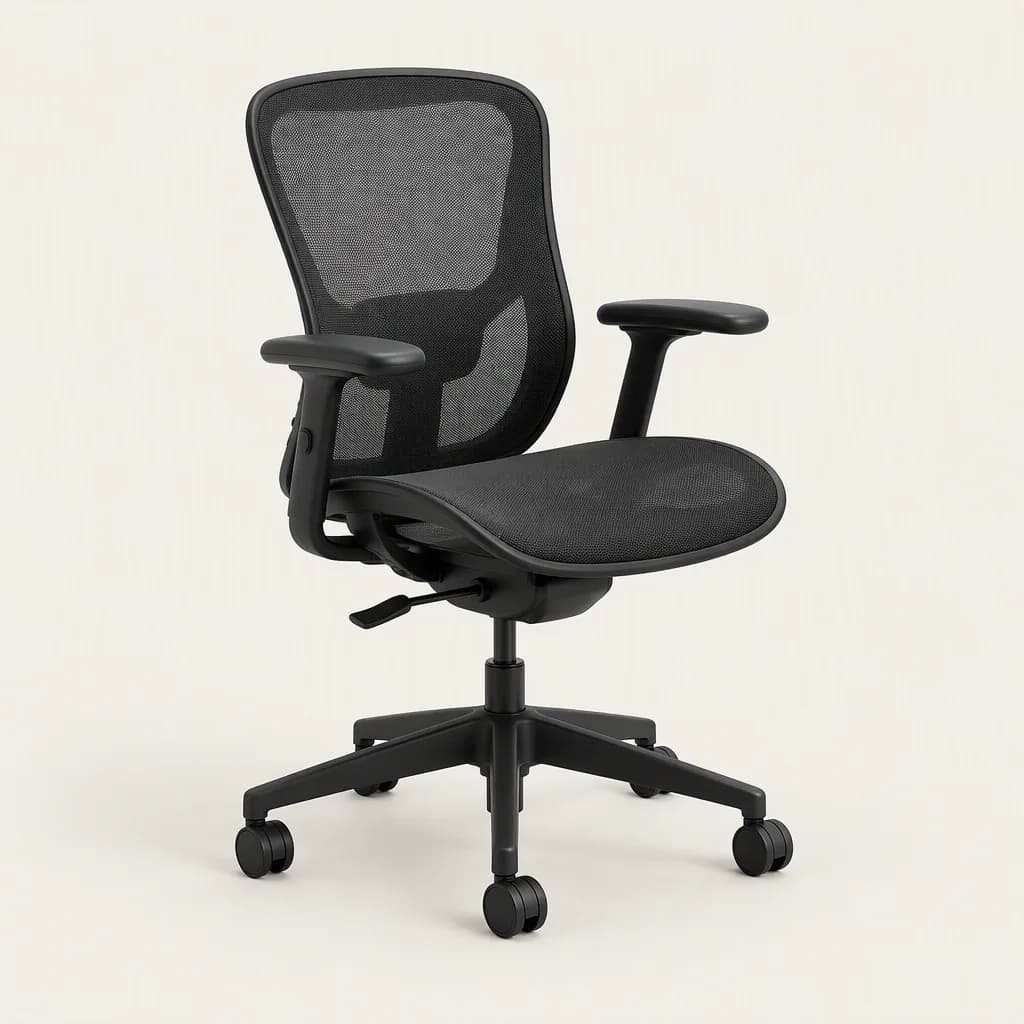
Black Ergonomic Office Chair
OFFICE › CHAIRS › ERGONOMIC
- STARTS FROM
- ₹4,999 · up to 250 products
- DELIVERY
- Agreed in your quote
- SCOPE
- Catalog data, feeds, structured data fields, FAQs
- HONEST LIMIT
- No one can guarantee placement in AI answers
Buyers now ask questions like "which waterproof jacket is good for a 10 km commute" in ChatGPT, in Google's AI Mode and in Perplexity. The systems that answer them read the same raw material your store already holds: titles, descriptions, attributes, prices, availability, reviews and markup. When that material is thin, contradictory or missing, you are harder to match and easier to describe wrongly.
We do the catalog-level work that fixes this. We do not sell link building, and we do not promise to put you in an AI answer. Nobody controls those answers. What can be controlled is whether your data is complete, consistent and easy to read.
What you get
- Complete, consistent attributes. Material, size, colour, dimensions, compatibility, age or gender group, GTIN and brand filled and normalised across the catalog, so the same thing is not written three ways.
- Titles and descriptions that answer buyer questions. What it is, who it suits, what it is made of, what it fits, what it does not do. Written for people first, then checked for the terms shoppers use.
- Product and Offer structured data fields. We prepare the values (price, currency, availability, identifiers, brand, shipping and return details where you have them) and supply them for your theme or developer to output. We do not rewrite your theme unless you ask.
- A clean Merchant Center feed. Google's shopping experiences draw on Merchant Center data, so disapprovals, missing identifiers and price or availability mismatches are fixed at the source.
- FAQ content on product and collection pages. Real buyer questions answered in plain text on the page, drafted from your own specs, policies and support history, then approved by you.
- llms.txt and crawler access checks. We review robots.txt, CDN and firewall rules against the documented crawlers (Googlebot, OAI-SearchBot, PerplexityBot), and add an llms.txt file if you want one. Google states that AI features need no special AI text files, so treat llms.txt as optional housekeeping.
- Feeding AI shopping programs where available. Only the programs we have verified against their own documentation, described below.
- An audit report. What we found, what we changed, and what sits outside the catalog and needs your developer.
How it works
- You share a product export or staff access, and Merchant Center access if you use it.
- We audit the catalog, feed and a sample of pages, and send a fixed quote with the findings.
- Our AI engine does the volume work (normalising attributes, drafting descriptions and FAQs); a person reviews every output.
- You approve changes on a draft or staging state, plus the structured data values and robots.txt recommendations.
- We publish, resubmit the feed and give you a change report.
What the platforms actually document
This is where most agency pages drift into promises, so here is what we can stand behind.
| Surface | What is documented | What we do |
|---|---|---|
| Google AI Overviews and AI Mode | Pages need to be indexed and eligible for a snippet. No additional requirements. Google recommends keeping structured data consistent with visible text and Merchant Center information current. | Make the data accurate and the feed clean |
| Google Merchant Center | Product data feeds Google's shopping experiences. Product structured data and a feed together give the widest eligibility. | Fix feed and page data together |
| ChatGPT shopping | Product results are chosen for relevance and are not ads. OpenAI has a product feed specification with required fields (id, title, description, URL, brand, seller, image, availability, price). Eligibility does not guarantee display. | Build and validate a feed to that spec for merchants onboarded by OpenAI |
| Shopify and ChatGPT | Shopify states ChatGPT is on by default for eligible stores selling to US customers, with policies filled in. | Check your eligibility and your product data inside Shopify Catalog |
| Perplexity | PerplexityBot surfaces sites in Perplexity search; allow it in robots.txt. Perplexity also runs a merchant program for sharing product data. | Crawler access check; feed support where you are accepted |
Programs change, and some are invitation-only or limited to certain countries. We check current terms at the start of your project and tell you plainly if a program is not open to you.
Platform notes that matter
On Shopify, product data reaches AI channels through Shopify Catalog, so what is in your product fields, metafields and policies is what gets read. Required legal text belongs inside the first 6,000 characters of a description. On WooCommerce, Magento and BigCommerce there is no equivalent automatic route into ChatGPT, so a feed built to OpenAI's spec, where you are accepted, is the realistic path. Everywhere, variants matter: each variant needs its own identifier and a shared group, which is also how Merchant Center expects them.
Pricing
Catalog cleanup starts from the prices below, covering up to 250 products. We give a fixed quote after we inspect your catalog and feed, before any work starts. See /pricing for all services.
| Market | Catalog cleanup from |
|---|---|
| India | ₹4,999 |
| United States | $199 |
| United Kingdom | £159 |
| Australia | A$299 |
Feed setup for an additional channel starts from ₹7,999 / $299 / £239 / A$449. Larger catalogs are quoted individually.
Is this a fit?
It suits stores with a few hundred to several thousand products whose data is patchy: missing attributes, supplier copy pasted straight in, a Merchant Center account full of warnings. It also suits agencies that need the data side handled for a client.
If your catalog is small and already clean, you can do most of this yourself with the checklist in our guide to AI search for ecommerce. If you want ranked-content strategy or link acquisition, look at our ecommerce SEO services or a specialist provider. If someone promises a guaranteed spot in AI answers, be wary.
Start with a free 10-product sample, or request a quote at /get-started. For the feed side alone, see /product-feed-management and /catalog-cleanup.
Related services and guides
Specialist pages and practical guides for this work.
SPECIALIST SERVICES
- AI product photography service, managed
- An Amazon virtual assistant, by the project
- Customer service automation, set up for you
- Catalog management as a service, not another tool
- Ecommerce outsourcing, productised
- Ecommerce product listing, one catalog, every channel
- Ecommerce SEO for your catalog data
- Google Merchant Center disapprovals, fixed
- Product data entry, without the double-keying
- Product descriptions, written for the whole catalog
- Product photo editing service, at catalog scale
- Shopify abandoned cart recovery, built for you
- Shopify store management, done for you
- Shopify store setup with products loaded
- A Shopify virtual assistant for catalog work
- A WhatsApp chatbot for your store
- WhatsApp COD confirmation, set up for you
- Catalogue management for Australian stores
GUIDES
- PRODUCT CONTENTHow products show up in ChatGPT, Google AI Overviews and Perplexity
- PRODUCT CONTENTA catalog data quality audit checklist you can copy and run today
- COSTS & OUTSOURCINGCatalog management service vs PIM software vs spreadsheets
- PRODUCT CONTENTDesigning product attributes and taxonomy for an ecommerce catalog
- PRODUCT CONTENTProduct description templates by category, with filled examples
- PRODUCT CONTENTProduct title formulas that work for SEO, Google Shopping and marketplaces
SEND US
10 PRODUCTS.
See what your catalog can look like before you commit to anything.
Free if your project is a fit.





Questions we get asked.
Something not covered here? Tell us about your catalog and we'll answer directly.
We cannot guarantee that, and nobody honestly can. Google says there are no extra requirements for AI Overviews beyond normal Search eligibility. What we do is make your catalog data complete, consistent and readable, so your products are eligible and described accurately when those systems look.
They overlap heavily. SEO targets ranked results, answer engine optimization targets direct answers, and generative engine optimization targets AI-written summaries. For a store, all three depend on the same base: accurate product data, crawlable pages and consistent markup. We work on that base, not on tricks.
No. This is catalog-level work: attributes, titles, descriptions, structured data fields, feeds and FAQ content on product and collection pages. If you want wider content or link work, we will say so in the audit and point you to the right kind of provider.
Catalog cleanup starts from $199 / £159 / A$299 / ₹4,999 for up to 250 products. We quote a fixed price after auditing your catalog and feed, because the work depends on how complete the data is and how many products are involved.
We confirm the timeline in your fixed quote, based on scope. The audit comes first, and you approve the changes before anything goes live.
A staff or collaborator account on your store, and a user role in Merchant Center if we touch the feed. We never ask for passwords, and you can remove access at any time. Your data is not used to train third-party models.
SEND THE CATALOG.
WE'LL TAKE IT FROM HERE.
Tell us what you have, where it needs to go, and how many products you're working with.