Product data entry, without the double-keying.
Send supplier sheets, PDFs or images. We return store-ready product data, extracted by an AI engine and checked by a person, with a QA report you can audit.
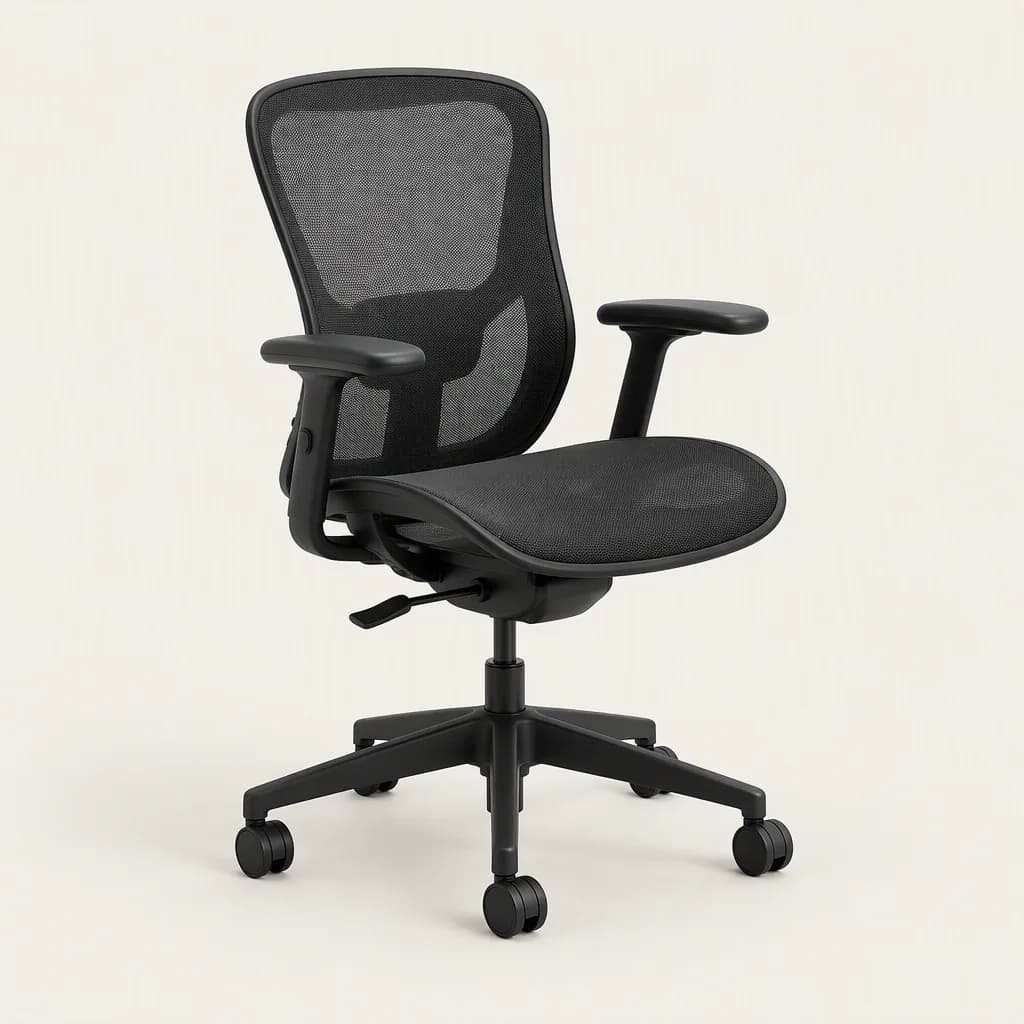
OFFICE › CHAIRS › ERGONOMIC
Premium Black Ergonomic Office Chair
- Description and specs written
- 3 colour variants
- SEO title and handle
- Image matched by SKU
- STARTS FROM
- $249 · up to 250 products
- DELIVERY
- From 48 hours*
- INPUTS
- Spreadsheets, PDFs, images, supplier feeds
- REVIEW
- Every output checked by a person
Product data entry is the dullest job in ecommerce and one of the costliest when it goes wrong. A wrong size on a variant becomes a return. A missing material field becomes a rejected feed item. A price typed with a misplaced decimal becomes a very bad afternoon.
Scenox Commerce handles product data entry as a managed service. You send source material, and you receive structured, store-ready data.
What you get
- Source data extracted into your platform's exact import format, whether Shopify, WooCommerce, Magento, BigCommerce, Wix or a custom build
- Titles, SKUs, prices, weights, dimensions, barcodes and stock levels mapped to the right columns
- Variants and options built from the supplier's size and colour logic
- Attribute values standardised: units, capitalisation, colour names, materials
- Images matched to the right product and variant
- A QA report of fills, flags and unresolved items
How it works
- You send spreadsheets, PDFs, images or a store export, and tell us the target platform.
- We inspect the files and send a fixed quote and a written delivery date.
- The AI engine extracts and structures the data; a person reviews every output against the source documents.
- You approve in a draft or staging state, with a list of any flagged items for your decision.
- We load the data through a staff account, or hand over a ready-to-import file.
Why AI plus review beats manual double-keying
The old defence against typing errors was double-keying: two people enter the same data and a system flags the differences. It works in principle. In practice it doubles the labour, it is slow, and both operators can make the same mistake when the source is ambiguous, such as a smudged PDF or a supplier abbreviation.
Our process changes where the human effort goes.
Extraction is not typing. The AI engine reads the source and produces structured fields directly. Nobody retypes a 14-character SKU, so nobody transposes two characters in it.
Rules run on every row. Before a person sees anything, the data is checked against rules: required fields present, prices numeric, variants sharing consistent option sets, units standardised, duplicates flagged.
The reviewer checks, rather than creates. A person compares output against the source and focuses on the cases the engine marked as uncertain. Reviewing is faster than keying and catches a different class of error: values that are formatted correctly but wrong.
Ambiguity goes to you. If a PDF says "approx. 30cm" or two suppliers give different weights, we do not guess silently. It appears in the QA report as a question for you.
We do not publish accuracy percentages, because they depend entirely on how clean your sources are. The QA report gives you the real picture for your own data, product by product.
Inputs we deal with every week
| Source | Typical trouble | What we do |
|---|---|---|
| Supplier Excel | Merged cells, one product per several rows, notes in the SKU column | Normalise structure, split notes into their own fields |
| PDF line sheet | Tables that copy badly, images embedded with text | Extract by region, verify against the page |
| Image-only catalog | Specs in photos | Read, structure, flag low-confidence values |
| Old store export | Duplicate SKUs, orphan variants | Rebuild parent and child relationships |
| Manufacturer feed | Different taxonomy from yours | Map to your categories and attributes |
Accuracy checks and what we will not guess
Every field has a source: your supplier sheet, spec PDF, packaging photo or an existing store record. Where a value is missing, we leave it empty and list it in the QA report rather than invent it. Checks we run on each batch include required fields filled, units and formats consistent, prices numeric and in the right currency, SKUs unique, barcodes valid length, image links resolving and variants attached to the correct parent.
Typical batch deliverables are the filled import file in your platform's format, an exceptions list, and a short note on anything ambiguous, such as two supplier rows that look like the same product. You decide those; we do not merge silently.
We keep the work to product data, and we never use your files to train third-party models.
Pricing
Starting prices for catalog listing, which includes data entry and upload:
| Tier | India | US | UK | Australia |
|---|---|---|---|---|
| Starter, up to 250 products | ₹6,999 | $249 | £199 | A$379 |
| Growth, up to 500 products | ₹9,999 | $449 | £359 | A$679 |
| Catalog Launch, up to 1,000 | ₹14,999 | $699 | £559 | A$1,049 |
| 1,000+ products | Custom quote | Custom quote | Custom quote | Custom quote |
The fixed quote comes after we inspect your files, before work starts. See pricing, or read what drives the numbers in how much product upload costs. The service is described in full at bulk product upload.
Is this a fit?
It suits you when you have hundreds or thousands of products to enter, source files in awkward formats and no spare staff hours. Retailers adding a new supplier line, brands relaunching on a new platform and agencies with a client backlog all fit well.
If you have thirty products and a tidy spreadsheet, enter them yourself; the time saved will not justify a project. And if your source data is incomplete, no process can invent what is missing. We will tell you which fields are absent before we quote, and you decide whether to supply them or leave them blank.
Try the free 10-product sample if the project is a fit, or ask for a fixed quote at /get-started.
*For eligible projects. Turnaround depends on scope, catalog complexity and the quality of the data and access we receive.
Related services and guides
Specialist pages and practical guides for this work.
SPECIALIST SERVICES
- AI product photography service, managed
- AI search optimization for your catalog
- An Amazon virtual assistant, by the project
- Customer service automation, set up for you
- Catalog management as a service, not another tool
- Ecommerce outsourcing, productised
- Ecommerce product listing, one catalog, every channel
- Ecommerce SEO for your catalog data
- Google Merchant Center disapprovals, fixed
- Product descriptions, written for the whole catalog
- Product photo editing service, at catalog scale
- Shopify abandoned cart recovery, built for you
- Shopify store management, done for you
- Shopify store setup with products loaded
- A Shopify virtual assistant for catalog work
- A WhatsApp chatbot for your store
- WhatsApp COD confirmation, set up for you
- Auto parts catalogs, with fitment that holds up
GUIDES
- PRODUCT UPLOADBigCommerce bulk product import: the CSV template, variants, images and common errors
- PRODUCT UPLOADFashion catalog upload: variants, size charts, colour swatches and the data that cuts returns
- COSTS & OUTSOURCINGHow to hire a Shopify expert: who does what, how they charge and what to ask
- PRODUCT UPLOADHow to set up a Shopify store: a step-by-step launch checklist
- PRODUCT UPLOADMagento 2 and Adobe Commerce product import: CSV format, configurables and validation errors
- COSTS & OUTSOURCINGOutsourcing product upload: in-house, freelancers, apps or a service?
SEND US
10 PRODUCTS.
See what your catalog can look like before you commit to anything.
Free if your project is a fit.





Questions we get asked.
Something not covered here? Tell us about your catalog and we'll answer directly.
Traditional outsourcing relies on people typing or pasting values, often twice, to catch mistakes. We use an AI engine to extract and structure the data, then a person reviews the result against the source. Less retyping means fewer typing errors and a faster turnaround.
Excel and CSV sheets, supplier PDFs and line sheets, image-based catalogs, existing store exports and manufacturer feeds. If the data lives somewhere unusual, send a sample and we will tell you whether we can extract it reliably before quoting.
You receive a QA report listing every field we filled, every value we flagged as uncertain and every product we could not resolve. You then approve the data in a draft or staging state before anything goes live.
Turnaround is from 48 hours for eligible projects; turnaround depends on scope, catalog complexity and the quality of the data and access we receive. The exact date goes in your written quote.
Only if you want us to load the data. We work through a staff or collaborator account you can remove, never a password. If you prefer, we return a platform-ready import file and you upload it yourself.
Yes. Price and stock updates from a supplier sheet are common requests. We match rows by SKU, show you a before and after file, and apply only what you approve. Large recurring updates fit better on the monthly Catalog Ops plan than as separate one-off jobs.
SEND THE CATALOG.
WE'LL TAKE IT FROM HERE.
Tell us what you have, where it needs to go, and how many products you're working with.